
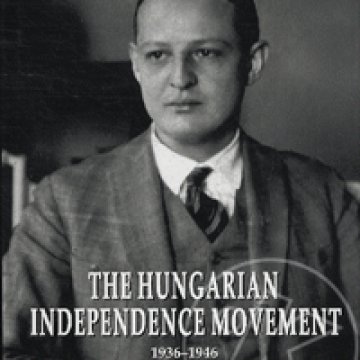
The Hungarian Independence... ár és hasonló termékek
 BUDAPESTI KERTIMAG KERTIMAG MAGKORONG OLASZ FŰSZERKEVERÉK PRÉMIUM 8
1 099 Ft
Praktiker
A bolthoz Info
BUDAPESTI KERTIMAG KERTIMAG MAGKORONG OLASZ FŰSZERKEVERÉK PRÉMIUM 8
1 099 Ft
Praktiker
A bolthoz Info






 LÍRA KÖNYV ZRT. Hoztam, kaptam, átszabtam: A személyiségformálás lehetőségei
2 799 Ft
Media Markt
A bolthoz Info
LÍRA KÖNYV ZRT. Hoztam, kaptam, átszabtam: A személyiségformálás lehetőségei
2 799 Ft
Media Markt
A bolthoz Info





The Hungarian Independence Movement, 1939-1946 jellemzők
By the early 19410s Domokos Szent-Iványi, though still young, had shown personal qualities and acquired experiences in diplomacy and governing that in nirmal times would have fitted him for the highest positions in government. Instead, ha was just about to embark on a path that led by degrees from clandestine internal conspiracy within the Horthy regime through high-stakes diplomatic poker with Molotov to political defeat, imprisonment, torture, obscurity, and exile.
Millions suffered similar and worse fates in the maelstrom of the Second World War and afterwards; he was one of the very few who knew what awaited him and Hungary. In 1938, he wrote a memorandum predicting that the forthcoming conflict would ruin Europe and leave Soviet Russia and the United States as the only remaining world powers.
This extraordinary foresight made Szent-Iványi exceptional even among those Hungarian leaders who sought to detach their country from Hitler's deadly embrace. Others nursed hopes of a separate surrender to the Angol-Americans; he saw that Wetsern strategy and Hungary's geographhical position together made that a delusion. Hungary must therefore adopt a friendlier attitude to its inevitable ruler, soften the conditions of servitude by doing so, and plan for better times and the weakening of Soviet power.
Szent-Iványi's revenge is this great memoir. A major contribution to our understanding of Hungarian history in the worst of times, it is also high gossip: a series of riveting psychological portraits of the statesmen, civil servants and diplomats, some heroes, some villains, from Pál Teleki to László Bárdossy who helped to shape their country's future for good or ill. Writing well-not living well-is the best revenge.
Szent-Iványi's predecessor, Machiavelli, baers a name we all know. Remind me: who had him tortured?
(John O'Sullivan, writer, associate editor of Hungarian Review)
Millions suffered similar and worse fates in the maelstrom of the Second World War and afterwards; he was one of the very few who knew what awaited him and Hungary. In 1938, he wrote a memorandum predicting that the forthcoming conflict would ruin Europe and leave Soviet Russia and the United States as the only remaining world powers.
This extraordinary foresight made Szent-Iványi exceptional even among those Hungarian leaders who sought to detach their country from Hitler's deadly embrace. Others nursed hopes of a separate surrender to the Angol-Americans; he saw that Wetsern strategy and Hungary's geographhical position together made that a delusion. Hungary must therefore adopt a friendlier attitude to its inevitable ruler, soften the conditions of servitude by doing so, and plan for better times and the weakening of Soviet power.
Szent-Iványi's revenge is this great memoir. A major contribution to our understanding of Hungarian history in the worst of times, it is also high gossip: a series of riveting psychological portraits of the statesmen, civil servants and diplomats, some heroes, some villains, from Pál Teleki to László Bárdossy who helped to shape their country's future for good or ill. Writing well-not living well-is the best revenge.
Szent-Iványi's predecessor, Machiavelli, baers a name we all know. Remind me: who had him tortured?
(John O'Sullivan, writer, associate editor of Hungarian Review)